Wednesday, January 04, 2012

NDP MLA Jagrup Brar walking the talk - and he deserves our thanks for exposing outrageously low welfare rates

MLA Jagrup Brar with son Fateh, left, and daughter Noor, right.
Jagrup Brar is a big man - with a big heart and a strong social conscience.

The New Democrat  Member of the Legislative Assembly for Surrey-Fleetwood accepted the challenge from Raise The Rates to live on social assistance - welfare - for a month to highlight just how difficult it is for the 180,000 British Columbians who need help from government to survive but get very little.

Jagrup is walking the talk - and is the first MLA to do this since the late great Emery Barnes in 1986, when the rate was only $350 a month.

You can see and read more at the website for this challenge.

I was particularly moved to see how proud Jagrup's 12-year-old daughter Noor was in speaking to Global TV about her father's determination to do something good for those in need.

Jagrup has to get by on just $610 for a month - of which $375 is for shelter and $235 for support - but pretty obviously the shelter money isn't enough anywhere in Metro Vancouver, so the support money gets used for rent, not food, for most recipients.

Social assistance rates are never an easy issue for governments of all stripes - the current BC Liberal government has a terrible record - the worst child poverty rates in Canada for eight straight years.

But the previous NDP governments and Social Credit governments also were strongly criticized at times for their policies.

I wish Jagrup well in not only getting through one difficult month that others face every month for years, but in opening the eyes and hearts of British Columbians to find a solution that lets people in need get the help they deserve.

.

Tuesday, January 03, 2012

Meeting Canada’s next Leader of the Opposition – who will win NDP leadership? Part 1 of 2

Jack Layton on big screen at CLC Convention May 2011 - Bill Tieleman photo

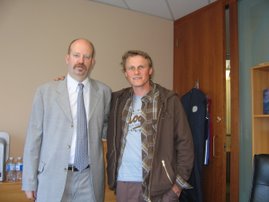
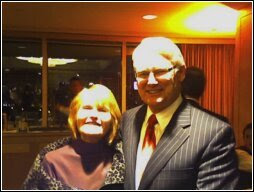
Brian Topp & Bill Tieleman


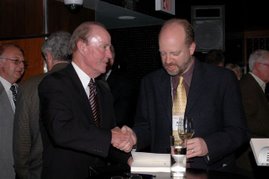
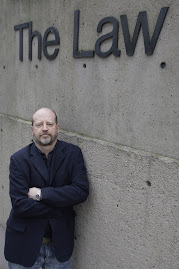
Thomas Mulcair & Bill Tieleman

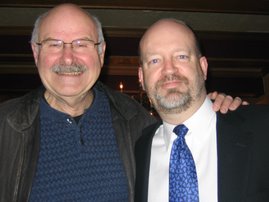
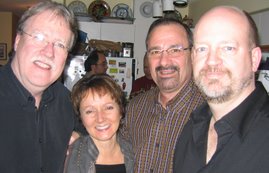
Peggy Nash & Bill Tieleman


Who's Best to Lead the NDP?

My look at the leadership candidates begins with Brian Topp, Thomas Mulcair and Peggy Nash.

Bill Tieleman's 24 hours/The Tyee column
Tuesday January 3, 2012
By Bill Tieleman
"No government can be long secure without a formidable opposition." 
- Benjamin Disraeli, 1804-1881
On March 24, the New Democratic Party will choose Canada's new leader of the opposition -- and potentially the country's next prime minister.

One of eight contenders will take the torch from Jack Layton, who became the NDP's first-ever opposition leader after the 2011 election before tragically dying from cancer.

How hard will it be for the new NDP leader to win power?

Consider that Conservative Stephen Harper is the only opposition leader of seven to become prime minister since Jean Chretien took power in 1993.

Voters rejected Liberal opposition leaders Stephane Dion and Michael Ignatieff in the last two elections against Harper.

Reform Party leader Preston Manning and his successor Stockwell Day of the Canadian Alliance also failed to move from opposition leader to prime minister when facing off against Chretien.

And Bloc Quebecois separatists Lucien Bouchard and Gilles Duceppe both did a term -- but had no practical chance to become PM being isolated to running candidates only in Quebec.

So the task is tough and the job is huge. How will they do it?

I've had the opportunity to meet with most of the leading candidates privately in the past few months to get a sense of what drives them, and how they would perform as opposition leader and possibly prime minister in waiting.

This is the first of two columns, restricted by both space and time. My conversations were not interviews -- each candidate is doing lots of those -- but my attempt to gain perspective on their style and approach while learning more about their backgrounds.

As both a columnist and NDP member, I will be endorsing a candidate prior to the vote but have not yet made up my mind whom that will be.

Three candidates are perceived by most media to be in the so-called top tier: Montreal Member of Parliament Thomas Mulcair, Toronto MP Peggy Nash and former NDP president Brian Topp of Toronto.

While the other candidates may not only disagree but prove the pundits wrong when the voting ends, for now it's a useful dividing line.

In a future column I'll talk about the considerable abilities and chances of B.C. MP Nathan Cullen, Ottawa MP Paul Dewar, Manitoba MP Niki Ashton, Quebec MP Romeo Saganash and Nova Scotia businessman Martin Singh.

Brian Topp's rich resume

I've known Topp for over 30 of his 51 years, since we were both student journalists -- he with the McGill Daily in Montreal and I at the University of B.C.'s The Ubyssey, connecting through the Canadian University Press.

Since then I have seen Topp at various points in his career -- most recently as executive director of the Alliance of Canadian Cinema, Television and Radio Artists (ACTRA) in Toronto, as Layton's national campaign director in the 2006 and 2008 elections and earlier as deputy chief of staff to then-Saskatchewan premier Roy Romanow.

Topp is attempting a big leap – from backroom party strategist who has never held public office to prime minister in waiting -- and to do daily battle with the formidable Harper.

But powerful people in the NDP are betting he can succeed. Romanow, former NDP leader Ed Broadbent, veteran B.C. MPs Libby Davies and Jean Crowder, new B.C. MPs Kennedy Stewart, Jinny Sims and Jasbir Sandhu, former B.C. NDP leader Carole James and many others are convinced and have endorsed Topp.

Topp can also rely on some of B.C.'s most experienced political staff working on his behalf, including former B.C. NDP campaign manager and provincial secretary Gerry Scott, former James' chief of staff Jim Rutkowski and senior James aide Raj Sihota.

In person, Topp is a fascinating combination. He has the strength to be self-deprecating, easily demonstrating his skills as someone who organizes workers and negotiates with some of the toughest employers in Canada, the TV and film industry.

A conversation with Topp makes you feel like you are being let in on big secrets, becoming a confidante and co-conspirator on even small issues over coffee at Tim Horton's.

Helped lead coalition plan

Topp is also extremely smart at politics. Layton's success in consecutively adding more seats to the NDP caucus in each election didn't happen either by accident or simply through the NDP leader’s enormous charisma -- Topp's strategy played a big role.

And when Layton attempted to topple the Harper minority Conservative government and replace it with an NDP-Liberal coalition with Bloc Quebecois backing, Topp was his lead negotiator, evenwriting a book on it titled How We Almost Gave the Tories the Boot.

I disagreed with the NDP's ill-fated coalition plan from the start but without question admire Topp's ability to almost achieve a remarkable result that would have seen Layton in cabinet and Harper in opposition.

Fluently bilingual and raised in Quebec but having worked for years in Saskatchewan politics and Ontario labour, Topp brings together all the elements one could imagine for success in the NDP.

But then, so do Mulcair and Nash.

For a backroom operative unknown to the Canadian public, Topp wisely used a pre-emptive shock and awe campaign launch, appearing to instantly be the frontrunner by rolling out the Broadbent endorsement and more -- a move that seemed to stun his potential opponents and galvanize early support.

Topp's current challenge remains his lack of a seat in Parliament -- and he has rejected the idea of running in a by-election to be called soon in Layton's former Toronto-Danforth riding, instead saying he will run in Quebec, although no seats are currently vacant.

Mulcair's 'royal jelly'

That problem doesn't exist for Thomas Mulcair, who led the early Layton breakthrough by winning a by-election in Montreal's longtime-Liberal stronghold of Outremont in and then helping build the NDP for the Orange Crush wave that devastated the Bloc Quebecois in 2011.

I first met Mulcair at a private lunch with Jack Layton in Vancouver in 2007 -- and was extremely impressed.

We met again last month and one thing is clear -- Mulcair easily comes across as someone who has the elusive "royal jelly" that distinguishes a great politician.

Confident without a hint of overconfidence, willing to disagree politely without rancour and with a polished style that shows his years in public office and as a senior lawyer, Mulcair makes a very strong and memorable connection.

His background, like Topp's but with different emphasis, is also ideally suited to becoming leader of the opposition.

Unlike most NDP MPs, Mulcair, 57, has served in a provincial cabinet, as environment minister in the Quebec Liberal government of Premier Jean Charest from 2003 to 2006.

Mulcair brought in a groundbreaking sustainable development plan but ultimately resigned from cabinet over an issue of principle, refusing to transfer lands from a provincial park to a private condominium developer.

The next year Layton recruited him as his Quebec lieutenant and he handily defeated the Liberals in a stunning by-election win that shocked the country that September.
It shouldn't have been as a surprise -- Mulcair has a record of success.

Mulcair's support in Quebec

Born in Ottawa, raised in Laval, north of Montreal, Mulcair worked in the Quebec justice ministry, then as president of the Quebec Professions Board and eventually being elected in 1994 for the first of three times as the Member of the National Assembly for the riding of Chomedey in Laval.

Mulcair has considerable support from Quebec, with 31 of the province's 59 NDP MPs supporting his leadership bid to date. [NOTE: I've corrected this error - Mulcair also has the backing of four Ontario MPs for a total of 35, not the 35 in Quebec I originally wrote - apologies for the error.]

But Mulcair's greatest challenge is to convince New Democrats outside Quebec, where he is far less known.

Mulcair has the endorsements of former Manitoba NDP premier Ed Schreyer, B.C. NDP MLA Claire Trevena, North Vancouver Mayor Darrell Mussatto, University of Victoria climatologist Andrew Weaver, Doug McArthur -- a former deputy minister to ex-NDP premier Glen Clark and ex-Saskatchewan NDP cabinet minister; Michael Byers, a former federal NDP candidate and UBC professor; B.C. NDP vice-president Heather Harrison and a few non-Quebec MPs.

With British Columbia boasting more NDP memberships than any other province and almost six times more than Quebec, Mulcair has to both sign up more members in his home turf and win votes here and in Ontario, which has the second highest party total.

Peggy Nash's tenacity

Toronto MP Peggy Nash is the third "top-tier" candidate vying to lead the party and has the background to compete with both Mulcair and Topp.

Nash comes out of the labour movement as a long-time Canadian Auto Workers activist who started as a booking agent for a Canadian airline and rose to became the union's senior negotiator -- and in 2005, the first woman to lead bargaining with the auto industry in North America.

Nash is not only tough -- she is someone who doesn't give up.

Nash lost a close contest in Parkdale-High Park riding in the 2004 federal election, was elected in the 2006 election and appointed industry critic, but lost the 2008 election to ex-Liberal leadership candidate Gerard Kennedy.

Nash returned to work at the CAW as an assistant to president Ken Lewenza and was elected NDP national president in 2009.

Nash then won the 2011 rematch with Kennedy in the election to return to Parliament. Nash's background led Layton to appoint her finance critic. (Ironically, Brian Topp then replaced Nash as party president until himself running for leader.)

In person, Nash is poised, a skilful listener and a diplomat -- all traits found in the best negotiators, who know when to press and when to move to another subject.

Her style is different than both Topp's and Mulcair's, not only as a woman running for leader but as someone with a more social activist background who is seen as to the left of her competition.

Commitment to issues

Fluent in French with an honours degree in French language and literature, and fluent as well in Spanish, Nash is known for championing both women's issues and the environment.


She has also served as an international election monitor in both South Africa and the Ukraine.

Nash's candidacy has drawn endorsements from former federal NDP leader Alexa McDonough, B.C. MPs Denise Savoie and Randall Garrison, economists Marjorie Griffin Cohen of Simon Fraser University and Mel Watkins of the University of Toronto, Quebec MPs Anne Minh-Thu Quach and Marjolaine Boutin-Sweet, Rabble.ca president Duncan Cameron and Pierre Ducasse, a 2003 NDP leadership candidate and Quebec advisor to Jack Layton.

Nash's challenge is clear -- she must edge out both Topp and Mulcair, the perceived front-runners, while holding off a challenge from other candidates, particularly Cullen and Dewar, whose chances may depend on second and third choice selections from NDP members.

Nash needs to capitalize on her higher profile in Ontario and within labour to gain signups and support while also mining vote-rich B.C.

The NDP is undergoing simultaneous and enormous political changes, having to adjust to the traumatic loss of Jack Layton at the same time as it takes on the huge responsibilities of forming the official opposition, under the temporary leadership of Quebec MP Nycole Turmel.

None of these three leadership candidates nor the other five NDP contenders can possibly replace Layton. That's never been the goal.

But each of them believes they can follow in Layton's footsteps to succeed with his biggest project of all -- to not just supplant the Liberals to become the opposition but to form a social democratic Canadian government.

The next three months will determine who gets that opportunity to take on Stephen Harper, and what their chances are of success in 2015.

.

Monday, January 02, 2012

Ex-Premier Glen Clark and billionaire Jimmy Pattison - Jas Johal's series on Global TV starts Tuesday

Ex-Premier Glen Clark and billionaire Jimmy Pattison - Global BC reporter Jas Johal's fascinating and exclusive series starts on Tuesday - see the preview of "The Odd Couple".


.

Tuesday, December 27, 2011

Basi-Virk 8th Anniversary - a different view of BC Legislature Raid - how to hide the obvious in making BC Rail disappear

The obvious part - David Basi & Bob Virk after surprise guilty plea - October 18, 2010 - Bill Tieleman photo

How BC Rail Was Made to Disappear


Eight years later, looking back at the BC legislature raid, and where we've arrived.

Bill Tieleman's The Tyee column
Tuesday December 27, 2011
NOTE: 24 hours Vancouver newspaper is not publishing daily this week - back January 3, 2012
"No question is so difficult to answer as that to which the answer is obvious."

- George Bernard Shaw

What happened when an unprecedented police raid on British Columbia's legislature took place eight years ago Wednesday?

How did the BC Liberal government's $1 billion privatization of BC Rail spark the province's biggest political scandal in decades?

Why did the ministerial aides to then finance minister Gary Collins and then transportation minister Judith Reid -- David Basi and Bob Virk -- defend themselves against charges of breach of trust and fraud for six years only to make a surprise guilty plea bargain when their trial had heard just two of a likely 40 witnesses?

Who knew what and when?

And when, if ever, will we find the answers to these questions?

Through a public inquiry repeatedly rejected by Premier Christy Clark but promised by New Democrat leader Adrian Dix, should he form the next government?

Perhaps some of those answers are already obvious.

One clue requires us to travel back in time and space to Princeton University in September 1969.

An ancient American Revolutionary War cannon, partially buried in the Princeton grounds and anchored with cement, disappeared overnight.

The only trace of the extremely heavy cannon's former hallowed location was a giant mound of earth left when the suspected perpetrators -- Rutgers University students who had left graffiti insulting Princeton behind -- had somehow silently removed the artillery piece in the dead of night.

It was a total mystery how this stunning feat of theft done with astonishing speed and impressive logistics could have been accomplished.

But the secret was eventually solved when Princeton's student newspaper got a tip that led to the dirt on the crime -- look underneath the pile of earth!

The cannon had never moved an inch, nor been disinterred from its resting place.

Instead the brilliant plotters correctly predicted that no one would think the cannon was exactly where it always sat -- and that the mountain of dirt it was buried in would convince all observers that an amazing criminal act had taken place.

What's more -- it wasn't Rutgers students who did the dirty deed -- it was a group of Princeton seniors who covered their tracks by leaving behind slurs on their own school, knowing that the 100 years of university rivalry would enrage Princeton.

So a missing cannon is exactly where it always was and perpetrators of the perfect crime turn out not to be whom everyone presumed.

That analogy may help explain the mystery of BC Rail's disappearance and how it happened right in front of our eyes.

Campbell's vow to sell

Let's go back to basics.

Then-premier Gordon Campbell narrowly lost the 1996 election to NDP Premier Glen Clark in part because the BC Liberals promised to sell BC Rail.

That means a clear intent was formed to privatize a Crown Corporation that had net income in 18 of the 21 years before it was put on the block.

During the 2001 election campaign, Campbell learned his lesson -- promising the reverse of his 1996 pledge -- this time he would not sell BC Rail.

But after eviscerating the hapless NDP under then-premier Ujjal Dosanjh and commanding a 77-2 seat margin in the B.C. legislature, Campbell secretly went back to his original plan -- get rid of BC Rail.

Campbell put the railway company on the auction block and invited bidders to make their best offer in a competitive process -- may the highest price win.

Unfortunately, some bidders were more equal than others.

During the process it was discovered and reported that CN Rail had been wrongly given confidential BC Rail operating information.

Due apologies were made and the bidding continued.

But major rail companies were increasingly uneasy about the whole situation.
CP Rail dropped out of the bidding a week before the announcement that CN had won, saying in a letter to Campbell's senior deputy minister Ken Dobell that the process was "unfair".

The Nov. 17, 2003 letter from the CPR vice-president of strategy and law, Marcella Szel, to Dobell says that its "market intelligence" showed "that CN was speaking directly to BC Rail shippers about their bid, with what we must consider the approval of the [BC Rail] Evaluation Committee, since the confidentiality agreement clearly stated no such discussions were to be held without consent."

"This feedback included the marketplace being aware of the actual value of the bids," Szel wrote to Dobell, just eight days before the B.C. government announced the sale of BC Rail to CN.

Anger by bidders at process

That letter was part of 8,000 pages of documents ordered released in early 2009 by then-B.C. Supreme Court justice Elizabeth Bennett in response to a court application filed on behalf of New Democratic Party MLA Leonard Krog.

Another major rail company -- Burlington Northern Santa Fe Railway -- also dropped out before the bidding ended, writing in a letter also disclosed in 2009 that it was "extremely dismayed with the handling of the BC Rail Transaction.... because of the lack of fairness in which the process has been conducted."

The letter went to CIBC World Markets, which handled the BC Rail sale for the province.
BSNF had been a business partner supporting the bid of OmniTRAX, which ended up being the only other bidder left competing with CN.

In an earlier letter to Wallace dated Nov. 18, 2003, Rickershauser blasted CIBC World Markets with both barrels:

"I and Burlington Northern Santa Fe Railway are extremely dismayed with the handling of the BC Rail Transaction, especially in recent weeks as managed by CIBC World Markets. Our dismay arises because of the lack of fairness in which the process has been conducted so far, the apparent favoritism of certain bidders, and the lack of timely information provided to all participants involved in the process," Rickershauser wrote.

"Reports and rumours of CN talking directly with BC Rail shippers and communities have been circulating for several weeks in shipper, government and media circles.... In fact, reports from shippers indicate that CN has been discussing what it will or will not do when it is awarded the BC Rail concession," Rickershauser ended.

We cannot determine the accuracy of either CP or BNSF's allegations of a tainted process that unfairly favoured CN Rail.

It is also worth noting that none of the huge railway companies that bailed out ever went to court to recover their costs in participating in the bidding, let alone filed legal action to have the process overturned because of that alleged unfairness.

Why not? CP Rail's Szel pretty much answers that question in her own bitter letter.

Szel wrote that she would like to: "discuss with you how the British Columbia government can re-establish this kind of confidence with the CPR."

In other words, there's still far too much business to be done in B.C. to pursue a scorched earth approach. No doubt BNSF felt the same way, despite its anger.

David McLean and CN's win

There was also a "fairness" advisor interim report by Charles River Associates into the bidding stating that: "the Province and its advisors designed and managed the BC Rail restructuring process in a manner consistent in all material respects with current best practices usually followed in similar transactions.

But still -- two reputable international railway companies dropped out of a bidding process because both felt it was designed to favour CN Rail.

Who was and remains the chair of CN Rail?

David McLean, one of Gordon Campbell's biggest and most long-standing supporters.

And CN Rail was one of the BC Liberal Party's most significant donors, contributing $113,000 between 1994 and 2004, and another $155,000 between 2005 and 2009.

Campbell's then-chief of staff Martyn Brown testified as the first witness in the Basi-Virk trial that he was unaware of CN donations to the party and that neither that nor McLean's role as Campbell's chief fundraiser in 1996 affected the sale.

"It was not at all a factor in the consideration," Brown swore in May 2010.

And with only complaints by competing companies but not any action, and with only allegations by lawyers for Basi and Virk under the protection of a court pre-trial hearing, that's the end of the matter.

Basi and Virk avoid jail

The defence for Basi and Virk made many bombshell claims in B.C. Supreme Court, allegations that if ever proven would have rocked the province and likely brought down the BC Liberal government.

But they weren't.

Basi and Virk's lawyers were negotiating hard in secret with Special Prosecutor Bill Berardino to make a guilty plea bargain deal for their clients.

In October 2010, that deal was done. Basi and Virk would spend two years on probation and not have to pay back any of the roughly $6 million in legal fees collected over the years by their lawyers Michael Bolton and Kevin McCullough. Nor would they spend any time in jail, as prosecutors originally demanded.

The deal meant no more testimony as planned from BC Liberal government insiders -- from ex-cabinet ministers like Christy Clark and Gary Collins -- or from a series of party operatives like Patrick Kinsella, the lobbyist who collected $297,000 as an advisor to BC Rail over four years, doing work that was unknown even to some of its senior executives.

Basi and Virk admit passing confidential government BC Rail bidding information on to Erik Bornmann and Brian Kieran --lobbyists representing OmniTRAX -- and justice is done.

What's that shape under the dirt?

So, let's go back to our missing cannon at Princeton University in 1969.

Just like the artillery piece hiding under a mountain of dirt, the B.C. Legislature Raid case is actually right where it always was.

Premier Gordon Campbell's government broke an election promise and sold BC Rail to one of his political party's biggest backers -- CN Rail -- in a competition where all but one other bidder dropped out, citing an unfair process they believed favoured CN.

The last remaining bidder, OmniTRAX, lost despite whatever advantages its lobbyists managed to procure from Basi and Virk in exchange for about $30,000 and a trip to Denver, Colorado for a football game.

And despite much of the BC Rail case being known to those voters who cared to look, the BC Liberals were twice re-elected to government after the 2003 raid, in 2005 and again in 2009.

It's that simple, unless you actually want to know everything that really happened.

That will still take a public inquiry -- you can support that position at a Facebook page I set up calledBasi-Virk Public Inquiry. 

.

Saturday, December 24, 2011

Merry Christmas to all and a Happy New Year too!

Christmas 2010 - West Broadway, Kitsilano - Bill Tieleman photo
Best wishes to all my readers for a very Merry Christmas and a Happy New Year! 

Like the poster says, let's remember to live more and buy less - and help those in need at this special time of year. 

Cheers,

Bill 


.

Wednesday, December 21, 2011

Kevin Falcon the Fall Guy for Jim Flaherty - BC loses billions in health care funding, HST repayment - but Falcon fails to get it

Ex-Premier Gordon Campbell & Finance Minister Kevin Falcon - asleep at the switch
BC Liberal Finance Minister Kevin Falcon must have had that falling feeling Monday when he praised federal Conservative Finance Minister Jim Flaherty's new plan to reduce health care funding increases - then watched as most of his provincial counterparts denounced Flaherty.

Why?  Because the federal Conservatives just pulled the rug out from under BC and other provinces' funding, six ways from Sunday.

Flaherty surprised provincial finance ministers by unilaterally announcing that Ottawa will end current health care funding increases of 6% a year by 2017, despite rising costs, leaving the provinces to make up the difference.

The new plan will also reduce BC's per capita health care funding because Ottawa's funding formula doesn't deal with our aging population's hire costs, meaning up to an additional $250 million a year will be lost.

But too late - Falcon was already on the record:  "From B.C.'s perspective, we think certainty is good thing," he said. "We cannot ignore what is taking place around the world."

Huh?  What's going on is that BC is getting shafted and Falcon was sticking up for his federal Conservative friends, not British Columbia.

Quebec's Finance Minister Raymond Bachand wasn't as thick as Falcon.

Bachand called the unilateral federal decision to dramatically reduce funding "totally unacceptable."

Nova Scotia Premier Darrell Dexter called it "profoundly disappointing".

Saskatchewan Premier Brad Wall said it was "frustrating".

Ontario Finance Minister Dwight Duncan said the provinces will lose $21 billion.

"It means less access to quality health care," Duncan said.


By Tuesday even Falcon had figured out that BC was being shafted.


And his hardline response?  He'll ask the federal government to "adjust" the per capita formula - but if BC got that "we'd be very happy with the rest of the package."


Falcon and BC Premier Christy Clark have also thrown in the towel on getting repayment of the federal Harmonized Sales Tax grant of $1.6 billion reduced to reflect the period of time the HST will have been in effect.  


Now they are hoping to claim "victory" by getting an extended lay-away plan to repay the entire amount.


Just one question - wouldn't you love to play poker with these jokers?


Jim Flaherty must be laughing all the way back to Ottawa.


Pathetic.


.