As Canada revisits a ban on
doctor-assisted suicide, I think of my mom Pat, who died in needless pain
 |
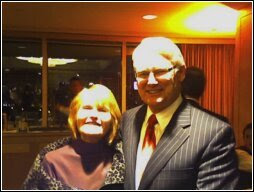
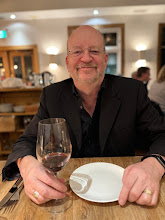
| Pat and Bill Tieleman in July 2008 - Janice Porteus photo |
Bill Tieleman’s 24 Hours Vancouver /
The Tyee column
Tuesday
January 21, 2014
By Bill Tieleman
"It
doesn't make any sense that it's legal for me to commit suicide, but it's
illegal for someone to help me to die at peace, without pain, in the comfort of
my home, with family and friends surrounding me."
-
Gloria Taylor, plaintiff
Mother's
Day will always be difficult for our family, because it's the day my mom
started coughing up blood and was rushed by ambulance to the hospital.
As I
looked in her eyes before the paramedics arrived, we both wordlessly knew that
she would never again set foot in her cozy apartment filled with the treasures
of a rich life.
Pat
Tieleman died
three weeks later of lung cancer. And at the end, she needlessly died in pain
-- because of an unjust law she opposed.
I
applaud the B.C. Civil Liberties Association (BCCLA) for taking on that
law, which stops doctors from helping suffering, terminally ill
patients leave this world with the aid of a merciful dose of drugs.
The
Supreme Court of Canada last week agreed to hear an appeal of a lower court
ruling that upheld a ban on physician-assisted suicide.
The
B.C. Appeal Court split decision overturned an eloquent, well-researched and
compassionate decision
by B.C. Supreme Court Justice Lynn Smith, saying that the right to die with
dignity is protected by Canada's Charter of Rights and Freedoms.
Gloria
Taylor was one of the BCCLA plaintiffs, a brave woman suffering from Amyotrophic
lateral sclerosis (ALS) -- also known as Lou Gehrig's Disease --
that cruelly paralyzes the body and
kills two to three Canadians every day.
When
she could no longer deal with the pain and agony of terminal illness, Taylor
wanted the right to die on her own terms. She won a personal exemption to do so
through Smith's decision, but died of other causes before she could exercise
it.
But
thanks to her, Canada's highest court will rule again on physician-assisted
suicide, revisiting issues narrowly decided in the famous case
of Sue Rodriguez 20 years ago.
Witnessing
death without dignity
My
mom's death on May 26, 2010 convinced me overwhelmingly that the ban on
physician-assisted suicide is unjust.
Pat
Tieleman was a registered nurse who worked with the elderly for part of her
career. She and my father, Harry,
always believed that individuals should have the right to decide when the
suffering of their terminal illness should stop, as well as the right to a
doctor to help ease the inevitable end.
Sadly,
my father also died in pain. His life ended after a battle with Alzheimer's in
2000.
In both
cases I watched my parents' disease-ravaged bodies convulsively shut down for
hours before death came. It was extremely difficult to witness, and in my mom's
case I insisted a nurse administer additional morphine.
The
medical team at Nanaimo Regional General Hospital's palliative care unit was
excellent and compassionate, and it was not their fault a law they must obey is
so wrong.
Gov't
resists public opinion
Other
countries including the Netherlands
-- ironically my father's homeland -- Belgium, and our American neighbours in
Washington, Oregon and Vermont States have done the right thing and carefully
legislated rules that allow physician-assisted suicide for the terminally ill.
And
Canadians are overwhelmingly in favour of the same, in public opinion poll
after poll.
An
Environics survey
released in Oct. 2013 found that 71 per cent of those polled supported the
right of "a terminally ill or severely disabled person to end their
life," while 19 per cent disapproved.
But
both the federal and British Columbia governments disagree, fighting to
overturn the original Gloria Taylor decision and now defending the ban on
euthanasia in the Supreme Court of Canada. The court agreed to hear the case
but rejected a request for an expedited hearing.
That
likely means no decision until 2015 -- far too late for many terminally ill
Canadians.
It's
time Canadians spoke out against this cruel law that imposes suffering on those
already dying in pain. It could and should be changed by Parliament before the
hearing.
No one
should face death the way my parents did. If you agree, tell your Member of
Parliament and B.C. Member of the Legislative Assembly that outlawing mercy is
wrong.
What
I say to doubters
Not
everyone agrees with me. I recently debated euthanasia with Barbara Kay
of the National Post on CBC Radio's The 180
with host Jim Brown.
Kay
stated that contrary to my parents' experience, her parents died peacefully
with appropriate medical care and pain management, and argued that
physician-assisted suicide is unnecessary.
I'm
glad for her and anyone else whose loved ones pass without pain. But far too
many people do not, and their right to end their life free of suffering is
what's at stake.
Those
who worry about euthanasia becoming a widespread practice to get rid of the
elderly, people with disabilities and others simply for "convenience"
should look at the reports from places where physician-assisted suicide is
legal.
Washington
State's annual Death With
Dignity Act report for 2012 -- the state legalized the practice in
2009 after a voter initiative
passed -- shows that relatively few people need to take this option.
In
2012, just 121 participants requested a lethal dose of medication. The
legislation requires a doctor to write a prescription after determining their
patient has less than six months to live.
Of the
104 patients who died in 2012, 73 per cent suffered from cancer and another 10
per cent with neurodegenerative disease, including ALS. The remaining 17 per
cent had other illnesses, including heart and respiratory disease.
At
the end
Some
very prominent people support physician-assisted suicide, including renowned
theoretical physicist and author professor Stephen Hawking,
who has ALS.
"I
think those who have a terminal illness and are in great pain should have the
right to choose to end their lives, and those who help them should be free from
prosecution," Hawking told the BBC.
Hawking
is not alone. Prominent doctor Donald Low, who was microbiologist in chief
at Toronto's Mount Sinai Hospital and leading medical spokesperson during the
2003 SARS crisis, made a video plea for physician-assisted suicide days before
he died of terminal brain cancer on Sept. 18, 2013.
"I
know I'm going to die, what worries me is how I'm going to die," the
68-year-old Low said in the moving video.
"What
the end is going to look like, that's what's bothering me the most," he
said, referring to dying without assistance.
He
outlined what happens elsewhere but not in Canada: "They give you a very
simple way out. You drink a cocktail and you fall asleep, and you do this
in the presence of your family. In countries where it's legal, it's quite easy
to do. In countries where it's not legal, it's pretty well impossible."
It's time to
listen to people like Hawking and Low, as well as ordinary Canadians like Pat
and Harry Tieleman, and demand that legislators allow the terminally ill the
death with dignity they deserve.
.